Immune Checkpoint Inhibitors: PD-1, PD-L1, and CTLA-4 for FRCR Part 1
Understand immune checkpoint pathways, the mechanisms of PD-1/PD-L1 and CTLA-4 inhibitors, and their clinical applications for FRCR Part 1 Clinical Pharmacology.
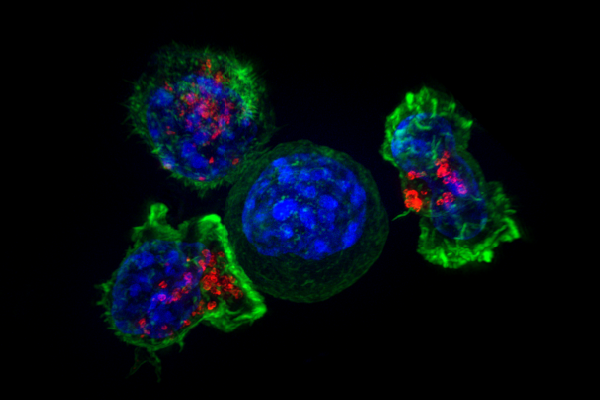
Immune checkpoint inhibitors (ICIs) have revolutionised cancer treatment, earning James Allison and Tasuku Honjo the 2018 Nobel Prize in Medicine. Understanding these agents is essential for FRCR Part 1, as they are increasingly combined with radiotherapy.
Immune Checkpoint Biology
The immune system has "checkpoints" - inhibitory pathways that prevent excessive immune activation and autoimmunity. Cancer cells exploit these checkpoints to evade immune destruction.
Normal T-Cell Activation:
- Antigen presentation by APC (Signal 1: TCR-MHC interaction)
- Co-stimulation (Signal 2: CD28-B7 interaction)
- Cytokine signals (Signal 3)
Checkpoint proteins provide inhibitory signals that switch off T-cell responses when appropriate.
CTLA-4 Pathway
Normal Function:
- CTLA-4 (Cytotoxic T-Lymphocyte-Associated protein 4) is expressed on T cells
- Competes with CD28 for binding to B7 (CD80/CD86) on APCs
- CTLA-4 has higher affinity than CD28
- Binding delivers inhibitory signal, suppressing T-cell activation
- Acts primarily in lymph nodes during T-cell priming (early immune response)
CTLA-4 Inhibitor:
- Ipilimumab (Yervoy): Anti-CTLA-4 monoclonal antibody
- Blocks CTLA-4, allowing CD28 co-stimulation to proceed
- Enhances T-cell activation and proliferation
- May also deplete regulatory T cells (Tregs) in tumour microenvironment
PD-1/PD-L1 Pathway
Normal Function:
- PD-1 (Programmed Death-1) is expressed on activated T cells
- PD-L1/PD-L2 (ligands) expressed on tumour cells and immune cells
- PD-1:PD-L1 binding inhibits T-cell effector functions
- Acts primarily in peripheral tissues (later immune response)
- Tumours upregulate PD-L1 to escape immune attack
PD-1 Inhibitors:
- Pembrolizumab (Keytruda)
- Nivolumab (Opdivo)
- Cemiplimab (Libtayo)
PD-L1 Inhibitors:
- Atezolizumab (Tecentriq)
- Durvalumab (Imfinzi)
- Avelumab (Bavencio)
Key Differences: CTLA-4 vs PD-1/PD-L1
| Feature | CTLA-4 | PD-1/PD-L1 |
|---|---|---|
| Location of action | Lymph nodes (priming) | Peripheral tissues/TME (effector) |
| Timing | Early immune response | Late immune response |
| Mechanism | Blocks co-stimulation | Inhibits effector function |
| Toxicity profile | Higher incidence irAEs | Generally better tolerated |
Clinical Indications
Approved Indications (examples):
- Melanoma: Nivolumab, pembrolizumab, ipilimumab (and combinations)
- NSCLC: Pembrolizumab, nivolumab, atezolizumab, durvalumab
- Renal cell carcinoma: Nivolumab, pembrolizumab, ipilimumab combinations
- Head and neck SCC: Pembrolizumab, nivolumab
- Hodgkin lymphoma: Nivolumab, pembrolizumab
- Urothelial carcinoma: Multiple agents
Combination Therapy: Nivolumab + ipilimumab shows synergistic effects in melanoma, RCC, and other cancers by targeting both early and late immune responses.
Predictive Biomarkers
PD-L1 Expression:
- Higher PD-L1 expression generally predicts better response
- Threshold varies by tumour type and assay
- Not absolute - some PD-L1 negative patients respond
Tumour Mutational Burden (TMB):
- Higher TMB = more neoantigens = better ICI response
- Pembrolizumab approved for TMB-high tumours regardless of histology
Microsatellite Instability (MSI-H) / Mismatch Repair Deficiency (dMMR):
- MSI-H tumours respond well to ICIs
- Pembrolizumab approved for MSI-H/dMMR tumours (tissue-agnostic)
Immune-Related Adverse Events (irAEs)
ICIs can cause autoimmune-like toxicities affecting any organ:
Common irAEs:
- Dermatological: Rash, pruritus, vitiligo (50-60%)
- Gastrointestinal: Colitis, diarrhoea (30-40%)
- Hepatic: Hepatitis (5-10%)
- Endocrine: Thyroiditis, hypophysitis, adrenal insufficiency (10-20%)
- Pulmonary: Pneumonitis (3-5%)
Management:
- Grade 1-2: Symptomatic treatment, continue ICI with monitoring
- Grade 3-4: Hold ICI, corticosteroids, specialist referral
- Severe refractory cases may need infliximab or other immunosuppression
Combination with Radiotherapy
There is significant interest in combining ICIs with radiotherapy:
Rationale:
- RT causes immunogenic cell death, releasing tumour antigens
- RT can upregulate MHC-I expression on tumour cells
- RT may prime the immune system for ICI enhancement
Abscopal Effect:
- Regression of non-irradiated metastases following local RT
- Mediated by immune system activation
- More frequently observed when RT combined with ICIs
PACIFIC Trial: Durvalumab maintenance after chemoradiotherapy improved survival in unresectable Stage III NSCLC - a landmark trial for RT-immunotherapy integration.
Key Exam Points
- CTLA-4 acts early (lymph nodes, priming); PD-1 acts late (periphery, effector)
- CTLA-4 inhibitor: Ipilimumab
- PD-1 inhibitors: Pembrolizumab, nivolumab, cemiplimab
- PD-L1 inhibitors: Atezolizumab, durvalumab, avelumab
- Combination ipilimumab + nivolumab is synergistic
- Predictive biomarkers: PD-L1 expression, TMB, MSI-H/dMMR
- irAEs can affect any organ; managed with steroids
- PACIFIC trial: Durvalumab after CRT in Stage III NSCLC
Enjoyed this article?
Share it with a colleague preparing for their FRCR.