Radiation Fractionation Schemes: Conventional, Hypofractionation, and SBRT for FRCR Part 1
Understand the radiobiological principles behind different fractionation schedules. Compare conventional fractionation, moderate hypofractionation, and SBRT for FRCR Part 1.
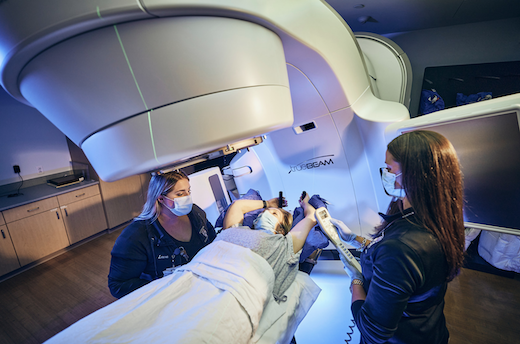
Fractionation - dividing the total radiation dose into multiple treatments - is fundamental to radiotherapy. Understanding different fractionation schemes and their radiobiological rationale is essential for FRCR Part 1.
Why Fractionate?
Fractionation exploits the biological differences between tumours and normal tissues, described by the 5 Rs of radiobiology:
- Repair: Normal tissues repair sublethal damage between fractions more efficiently than tumours
- Redistribution: Cells redistribute through the cell cycle, sensitising previously resistant cells
- Reoxygenation: Hypoxic tumour cells reoxygenate between fractions
- Repopulation: Both tumour and normal tissues repopulate (treatment shouldn't be too prolonged)
- Radiosensitivity: Intrinsic differences in sensitivity between tissues
Fractionation Definitions
Conventional Fractionation:
- 1.8-2.0 Gy per fraction
- Once daily, 5 days per week
- Total treatment: 5-7 weeks
- Example: 60 Gy in 30 fractions (2 Gy/fraction)
Hyperfractionation:
- Smaller doses per fraction (0.5-1.5 Gy)
- Multiple fractions per day (typically 2, separated by ≥6 hours)
- Higher total dose achievable with similar late toxicity
- Example: CHART for lung cancer (54 Gy in 36 fractions, 3 per day)
Accelerated Fractionation:
- Standard or slightly smaller doses per fraction
- Shorter overall treatment time
- Aims to overcome accelerated tumour repopulation
- May increase acute toxicity
Moderate Hypofractionation:
- 2.4-3.4 Gy per fraction
- Once daily
- Reduced overall treatment time
- Examples: Breast (40 Gy/15F), Prostate (60 Gy/20F)
Ultrahypofractionation / SBRT / SABR:
- ≥5 Gy per fraction (typically 7-20 Gy)
- 1-8 fractions total
- Highly conformal with steep dose gradients
- Examples: Lung SBRT (54 Gy/3F), Prostate SBRT (36.25 Gy/5F)
Radiobiological Rationale for Hypofractionation
Hypofractionation is advantageous when tumour α/β is lower than surrounding late-responding tissues:
Tissue α/β Ratios:
- Most tumours: α/β ≈ 10 Gy
- Late-responding normal tissues: α/β ≈ 3 Gy
- Prostate cancer: α/β ≈ 1.5-2 Gy (exceptionally low)
- Breast cancer: α/β ≈ 4-5 Gy
For tissues with low α/β, increasing dose per fraction delivers disproportionately more biological effect. If the tumour α/β is lower than OARs, hypofractionation favours tumour control while maintaining acceptable toxicity.
Key Clinical Evidence
Breast Cancer:
- START-A and START-B trials: 40 Gy/15F non-inferior to 50 Gy/25F
- FAST-Forward: 26 Gy/5F non-inferior (for whole breast after BCS)
- Hypofractionation now standard of care
Prostate Cancer:
- CHHiP trial: 60 Gy/20F non-inferior to 74 Gy/37F
- PROFIT trial: 60 Gy/20F similar outcomes to 78 Gy/39F
- PACE-B: SBRT (36.25 Gy/5F) under investigation
Lung Cancer (Early Stage):
- SBRT achieves >90% local control for T1-2 N0 NSCLC
- Standard: 54-60 Gy in 3-5 fractions
- Superior to conventional fractionation for inoperable patients
SBRT/SABR: Technical Considerations
Stereotactic Body Radiation Therapy (SBRT) or Stereotactic Ablative Body Radiotherapy (SABR) requires:
- Highly conformal dose distributions (small margins)
- Steep dose gradients (rapid dose fall-off)
- Image guidance (CBCT, fiducials)
- Motion management (4D-CT, gating, tracking)
- Patient immobilisation
Beyond the Linear-Quadratic Model:
- The LQ model may not accurately predict effects at doses >8-10 Gy
- SBRT appears more effective than BED calculations would predict
- Additional mechanisms may contribute: vascular damage, immune activation
Treatment Time Considerations
Overall Treatment Time (OTT):
- Accelerated repopulation in tumours typically begins at ~4 weeks
- Each day of treatment prolongation beyond 6 weeks reduces survival by ~1.6% in HNSCC
- Treatment gaps should be minimised
Interfraction Interval:
- Minimum 6 hours between fractions (for hyperfractionation) to allow repair
- SBRT typically given every other day to allow normal tissue recovery
Palliative Fractionation
Shorter courses balance efficacy against patient convenience:
- Bone metastases: 8 Gy single fraction = 20 Gy/5F = 30 Gy/10F for pain relief
- Brain metastases: 20 Gy/5F, 30 Gy/10F, or SRS (single fraction)
- Spinal cord compression: 8 Gy × 1, 20 Gy/5F, or 30 Gy/10F
Key Exam Points
- Conventional: 1.8-2.0 Gy/fraction, 5 days/week
- Hypofractionation: >2.5 Gy/fraction, fewer fractions
- SBRT: ≥5 Gy/fraction, 1-8 fractions total
- Hyperfractionation: smaller doses, multiple fractions per day
- Low tumour α/β (prostate, breast) favours hypofractionation
- Fractionation exploits the 5 Rs: Repair, Redistribution, Reoxygenation, Repopulation, Radiosensitivity
- Treatment prolongation reduces tumour control (~1.6%/day in HNSCC)
- SBRT requires high conformality, image guidance, motion management
Enjoyed this article?
Share it with a colleague preparing for their FRCR.